Step 1 - Create a Basic Flow
Introduction to Step 1
In this step we will create a very basic flow, just to get things going. This is a simple (and so unrealistic!) payment flow involving a payment instruction from a creditor that is immediately completed without any of the steps that a payment would normally go through. As new concepts are introduced, links will be provided to the relevant section of the IPF Developer Documentation to provide more information.
Defining the flow
You have a project, solution and model created for you with the domain specific language and dependencies that you need, so it’s time to try and set up the flow itself. Right-click on your model, select New>v2flo>Flow.
You will be presented with the following screen:
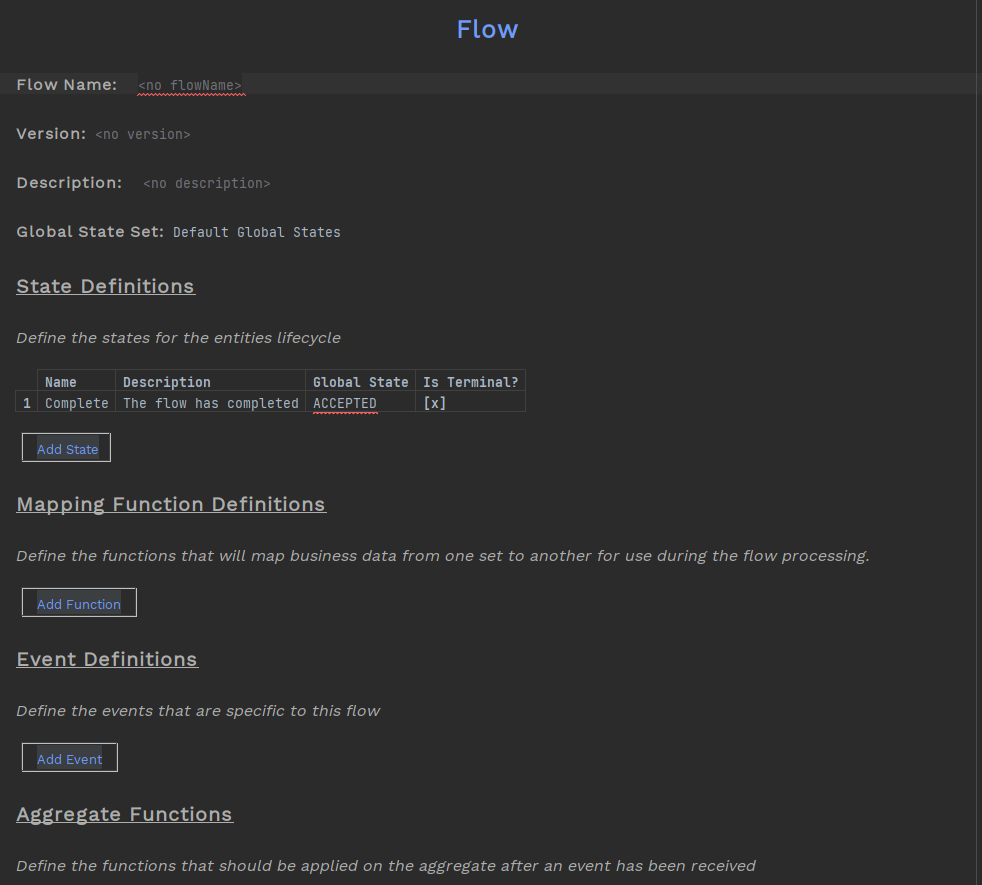
Type in 'Outbound Payment Flow' to name the flow, add a description, and then you can start filling in the important stuff.
Initiation Behaviour
The first thing we will look at is the initiation behaviour. A flow has to be started in some way, either through an instruction or (as we will see in a different section of the tutorial) from another flow. When a flow is initiated then we can define the first state and any action we would like to occur.
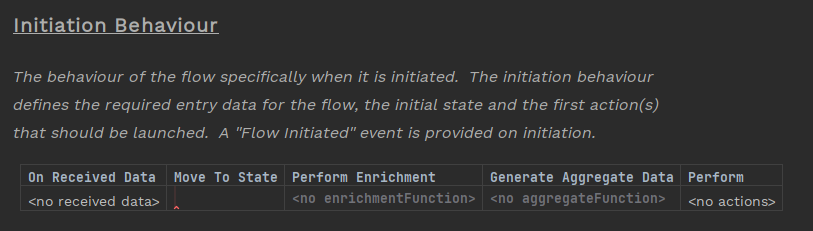
In this very simple flow we are going to immediately complete the flow, so the default initiation of moving to the "Complete" state is all we need.
States
In a flow, an object (a payment in this example) will transition between states. Each state used in a flow needs to be defined, and in this very simple first flow there is only one state "Complete". A Complete state is already provided by Flow Designer (but can be changed should you wish), so at this stage you do not need to do anything.
The complete state signifies our flow is finished (we’ll create other intermediary states in later steps of the tutorial). For this purpose there is a flag that is defined on the state called "Is Terminal?" which has automatically been selected. You will also see an "Is Publishing" flag, this isn’t used in the tutorial; it allows one flow to tell another it’s reached a particular state - if you want to read about it click here.
The 'Global State' is used to group states together to make them easier to navigate and select on the IPF Dashboard. We are not using the IPF Dashboard in this tutorial so we will leave this at the default setting of 'Accepted'.
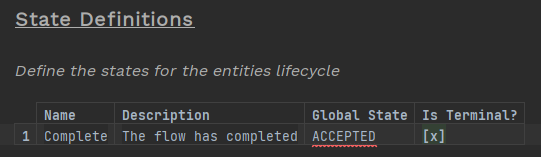
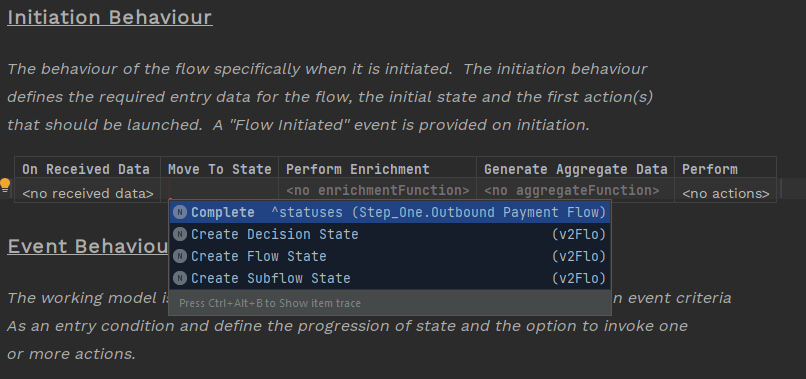
You can now select the 'Complete' status and that creates a very simple flow.
Checking the flow
Now we’ve entered everything to set up our flow.
You can check how the flow looks by using the Flo-Viewer.
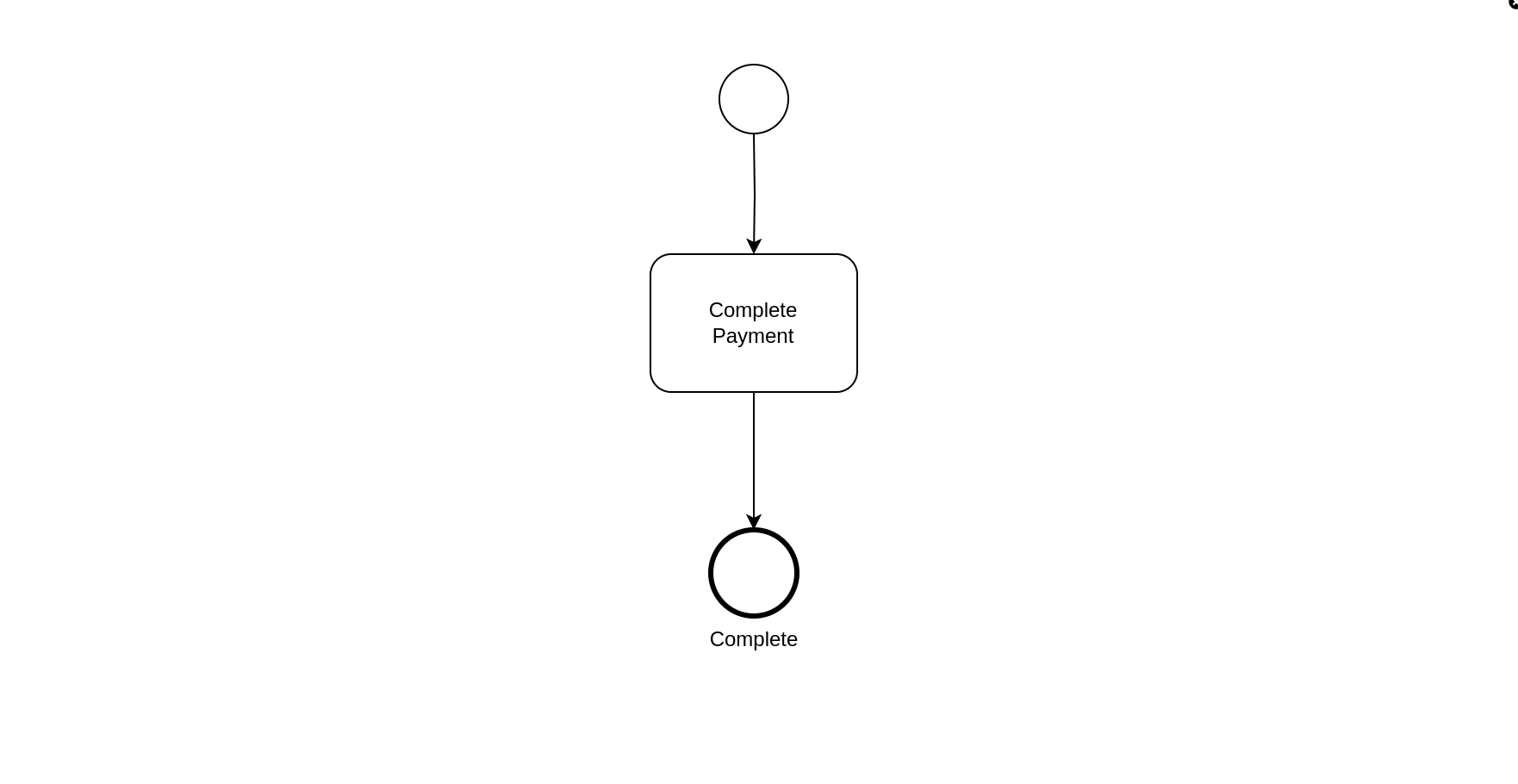
Place the cursor anywhere in the 'Outbound Payment Flow' tab and then select from the top level - you should see a diagram like this:
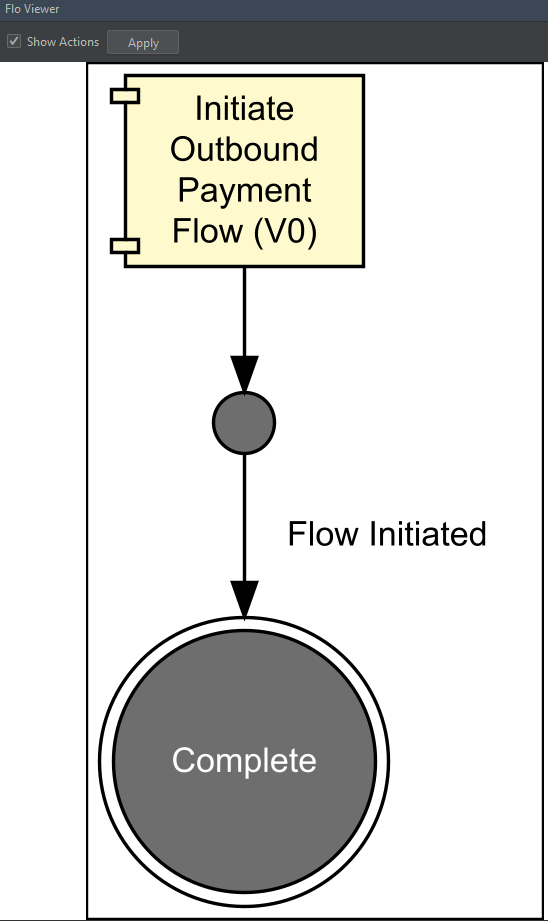
This is a pictorial representation of our flow. It shows you what you’ve just built. For now, it’s pretty simple, but as you continue working on your flow it updates in real time, so as you change and enrich your flows the results will immediately be seen. That gives you a really good way of reviewing the impact of changes as you’re making them.