Core Classes
Overview
Below is a simplified view of the various core classes relating to the IPF ISO2002 Message model
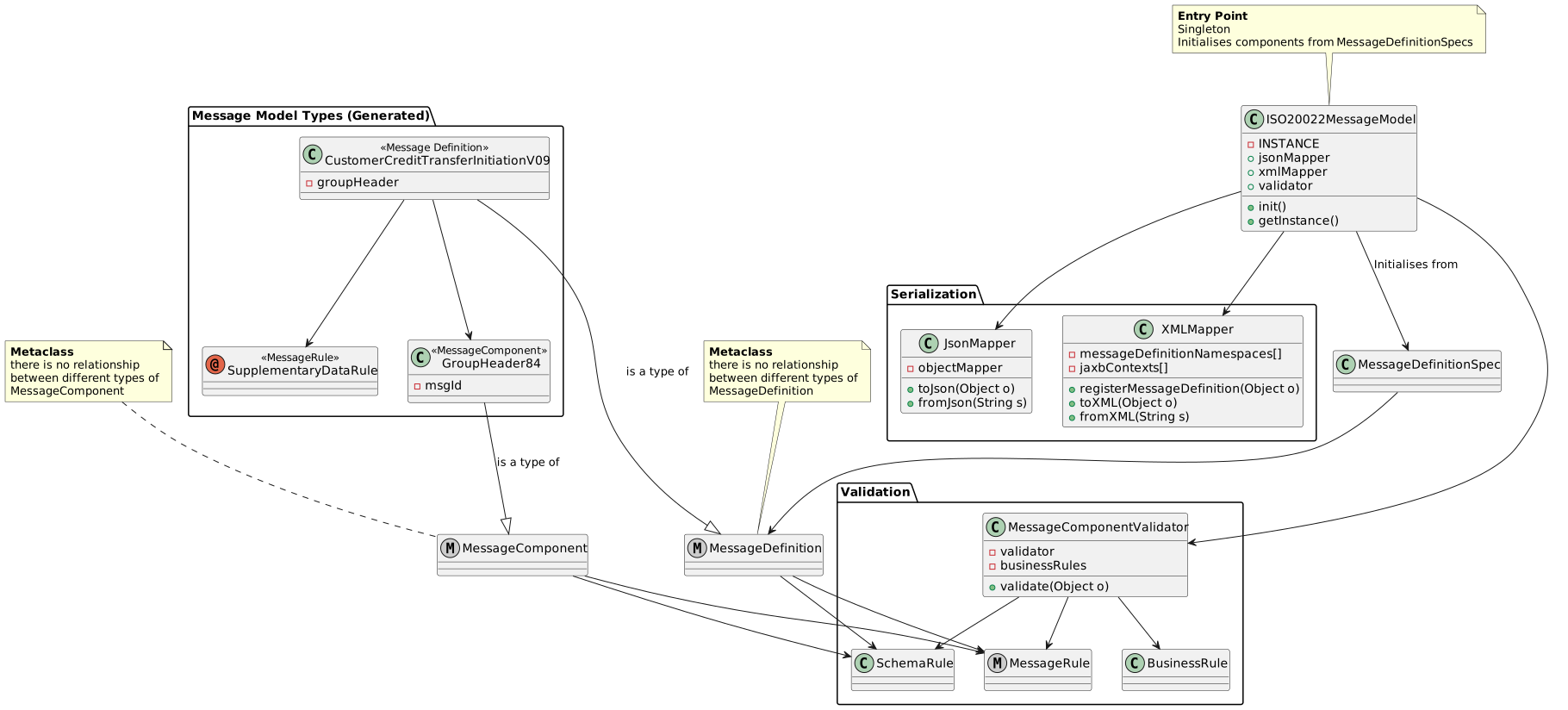
The main highlights being the following classes
| Class | Description |
|---|---|
ISO20022MessageModel |
This is the main access point for working with instances of Message Definitions. It is a configurable singleton. |
JsonMapper |
This handles JSON Serialisation and Deserialisation |
XMLMapper |
This handles XML Serialisation and Deserialisation |
MessageComponentValidator |
This validates Message Definitions or Message Components, it can perform Schema Validation, Message Rule and Business Rule Validation |
MessageDefinitionSpec |
This is generated metadata for each generated Message Definition. It is used to provide the ISO20022MessageModel with additional context for each MessageDefinition (such as namespace). The ISO20022MessageModel may then use this extra information to initialise its components, such as the XMLMapper. |
ISO20022MessageModel
This is the main entry point, it is a configurable singleton and is provided with context/metadata from the generated MessageDefinitions during instantiation, this context can then be used to bootsrap the underlying supporting components.
The ISO20022MessageModel contains an overloaded
ISO20022MessageModel.init()method as well as a traditional
ISO20022MessageModel.getInstance()The init() call does a singleton check in the same manner as getInstance(), however we differentiate with the intention that init() can accept configuration arguments, and we expect this to happen only once within an application.
The expect behaviour is a single init() at application startup, and then usage of getInstance() thereafter.
Repeated init() calls will return the original instance an log an error
Calling getInstance() without previously initialising through init() will result in a Runtime Exception.
|
API change likely
This approach of init() vs getInstance() will likely be changed into a single callable method. |